


The reading habit that quietly wins the 11+
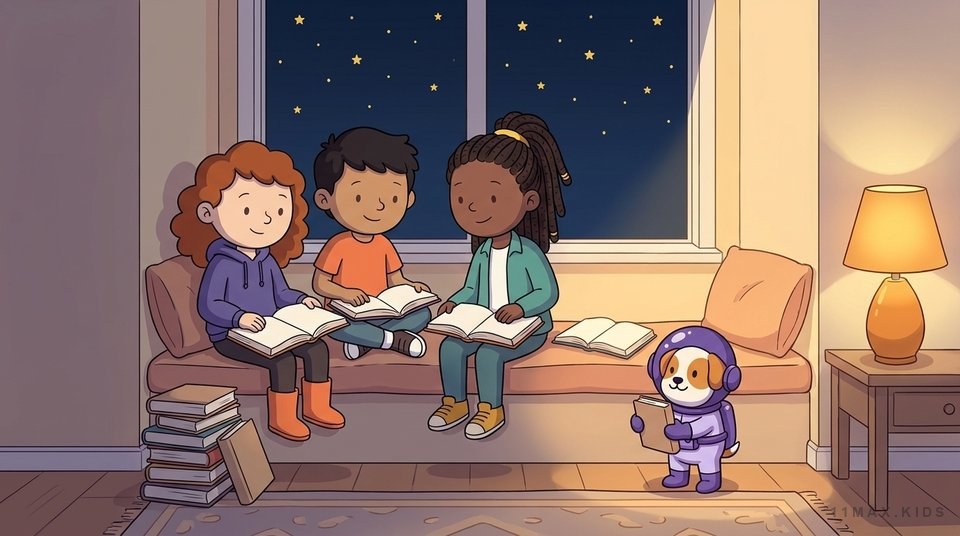
Ask a tutor which children sail through the 11+ and you will get the same answer more often than any other: the ones who read. Not the ones who started earliest, and not the ones who did the most papers. The ones with a wide vocabulary and the stamina to hold a long passage in their head.
This is the least fashionable advice in 11+ preparation, because it cannot be sold as a course and it does not show up on a progress chart for months. It is also the highest-leverage thing you can do.
Why vocabulary decides so much of the paper
Reading is not a separate subject from the test. It is underneath most of it.
- English comprehension is a reading test by definition, and the passages are usually older or more literary than a Year 5 reading book.
- Verbal reasoning is vocabulary wearing a puzzle costume. Analogies, odd-one-out and synonym questions are unanswerable if the words are unfamiliar, however clever the child is.
- Maths word problems collapse when a child misreads the question, which is a reading failure rather than a maths one.
- Writing tasks reward range, and you can only write with words you have met.
A child who reads widely for a year meets tens of thousands of words in context. No vocabulary list gets close, because words learned in a story stick and words learned from a list do not.
What to read
Range matters more than difficulty. A child who reads five easy books a week is building fluency; a child grinding through one book far above their level is building resentment.
That said, the 11+ leans on older and more formal language than most modern children's fiction, so it helps if some of the diet is classic. Frances Hodgson Burnett, E. Nesbit, Kenneth Grahame and Anna Sewell all write the kind of sentence that turns up in a comprehension paper. Mix them with whatever your child actually loves, including comics, non-fiction, football annuals and the same book for the fourth time.
Two things to leave alone: what they choose, and how fast they get through it. Both are where the habit dies.
When your child will not read
Some children simply will not sit with a book, and no amount of "twenty minutes of reading" on a chart changes that. The usual reasons are that decoding is still effortful, or that reading has become another chore in a day full of them.
Audiobooks solve more of this than parents expect. Listening comprehension and reading comprehension draw on the same underlying language: the vocabulary, the sentence structures, the sense of how a story is shaped. A child listening to a classic is meeting the same words they would meet on the page, without the decoding load that makes them give up.
The listening also happens in time you already have: the school run, the bath, the twenty minutes before sleep. Nobody has to sit down for it.
(This is why 11max ships an audiobook library rather than a reading log. Eleven narrated classics, the ones the 11+ borrows its language from, downloadable for offline listening in the car. It counts, and no one has to be nagged into it.)
How much, and how to keep it going
Twenty minutes a day is plenty. The two habits that survive a whole year in most families:
- Reading in bed, lights-out negotiable. The one moment children reliably want to stretch out, so it costs no willpower.
- Listening in the car. Dead time that turns into vocabulary, with no argument attached.
Read to them too, past the age it feels necessary. A parent reading aloud can carry a child through a book two years beyond their own reading level, and the discussion that happens naturally around it ("why did she do that?") is comprehension practice in everything but name.
What this is not
It is not a substitute for the rest of the preparation. Reading will not teach your child how to spot a rotation in a non-verbal reasoning grid, and it will not make them quick at long division. Those need practice at home across all four subjects.
What it does is raise the ceiling on everything else, quietly, over a year. Which is exactly why the families who start it early look, by September of Year 6, like they got lucky.